Frost Protection Health Checks
Annual proactive health checks on commercial and industrial frost protection systems. Trace heating cable testing, controller assessment, junction box condition, lagging and weather protection. Full digital report with photos, time-stamped findings and a remedial plan to bring any failed elements back to compliance before the next cold snap.
Trace heating is one of those systems that quietly works for years, until the winter it doesn’t. The most common failures (water ingress to joint boxes, weathered lagging, failed controllers, failed cable) are all completely preventable with an annual health check. The cost of the check is comfortably less than a single burst pipe.
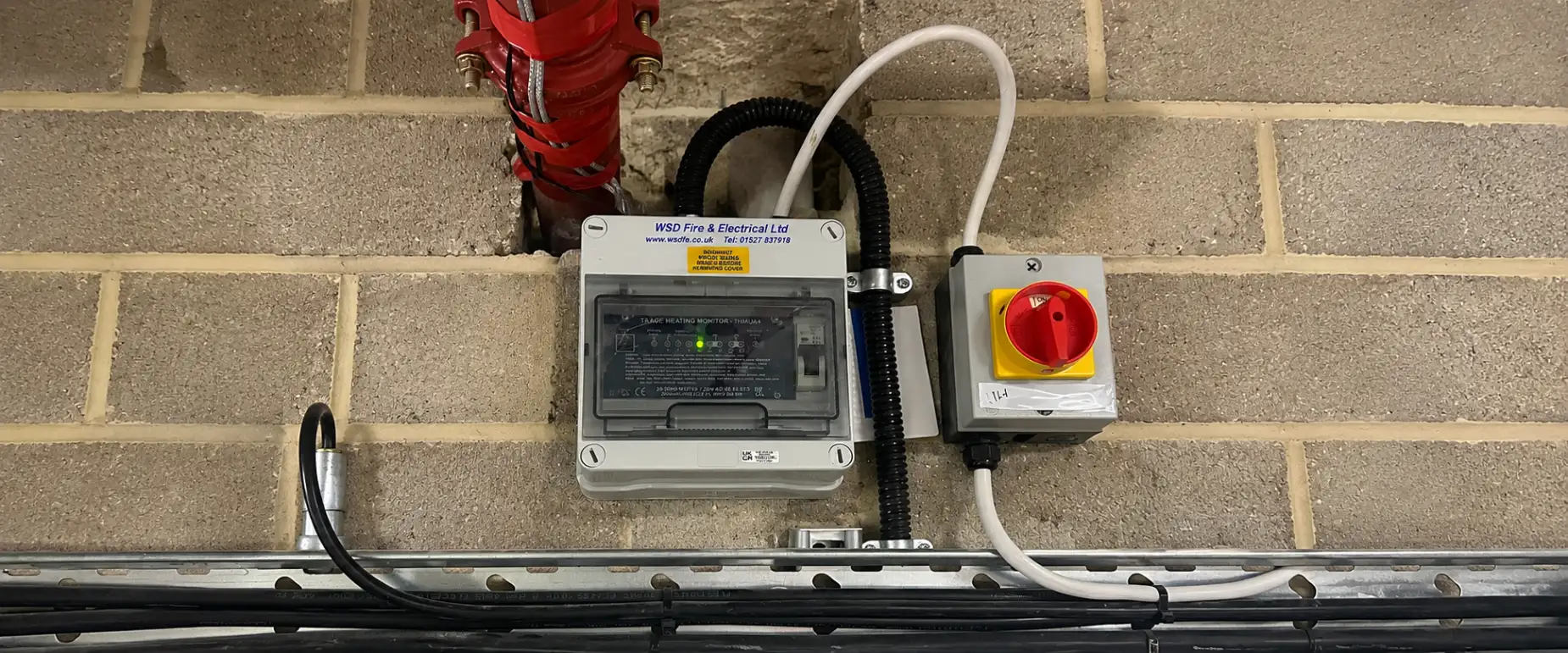
When to schedule a frost protection health check
Ideally annually, in early autumn, before the first hard frost. The aim is to identify and fix any failed or failing elements while the weather still allows access, before the system is actually relied on through winter.
For sites with no record of when the system was last properly checked, the survey is the right starting point regardless of timing.
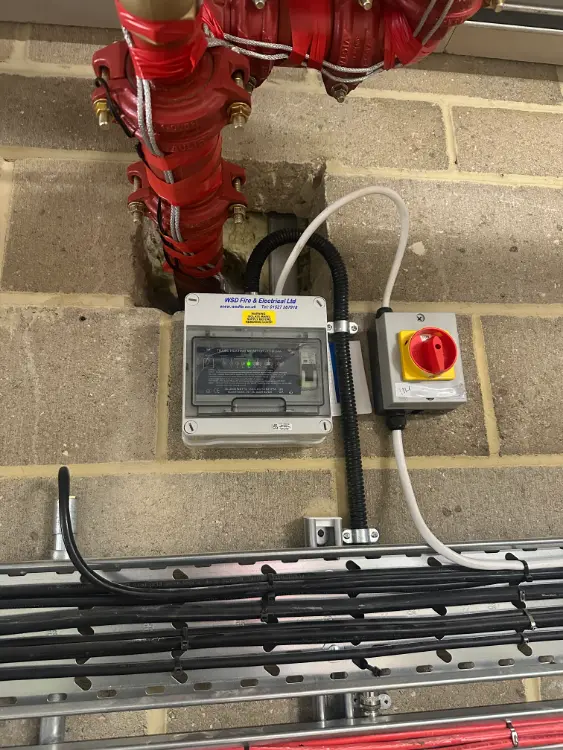
What's covered in a WSD frost protection health check
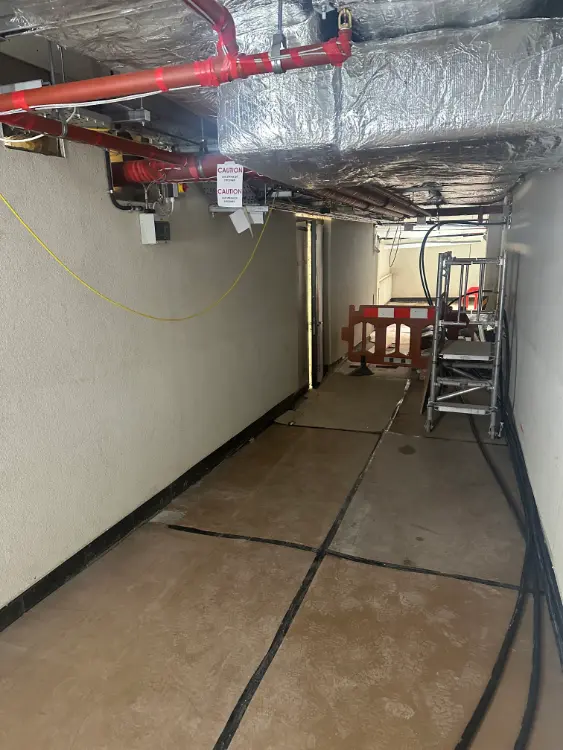
A full health check covers four areas of the installation, plus a detailed pipework take-off for reference and reporting.
Trace cable testing
- IR test completed at 500V DC, with the reading recorded
- Continuity test, with the reading recorded
- Resistance measurement, with the reading recorded
- Confirmation that measured resistance matches the expected per-metre value
- Cable condition inspection: physical damage, moisture, signs of overheating
Controller assessment
- Controller type identified
- Temperature sensor presence and operation confirmed
- Fault monitoring confirmed working
- Alarm output operation confirmed
- BMS integration verified
- Confirmation of whether the controller is obsolete
- Overall correct operation confirmed
- Recommendation on whether an upgrade is required
Junction box condition
- Enclosure intact, no damage
- No cracks or corrosion
- IP rating confirmed as appropriate for the environment
- Glands tight, with no signs of failure
- No moisture ingress
- Terminations secure
- No signs of heat damage
Lagging and weather protection
- Insulation dry, with no signs of saturation
- PiB (polyisobutylene weatherproofing) intact
- Cladding intact and properly secured
- Weather protection adequate for the environment
Pipework take-off
- Pipe size recorded
- Number and angle of bends (90°, 45°)
- Number of valves
- Number of flanges
- Other fittings (tees, reducers)
The pipework take-off serves two purposes: it confirms the trace heating design is still appropriate for the current pipework layout, and it provides an as-found baseline that’s useful if remedial work or replacement is required.
Got questions? We've answered the common ones.
Quick answers on cover, callout times, accreditations and what working with us actually looks like. Still got a question? Get in touch.
Are you accredited?
Yes. WSD holds BAFE (SP203-1), NICEIC Approved Contractor and SafeContractor accreditations, and we are members of the FIA and BSI. Insurance: £5m public liability, £10m employers’ liability, £1m professional indemnity, £5m product liability. Certificates available on request.
What does the frost protection health check cover?
Trace cable testing (IR, continuity, resistance), controller assessment (type, fault monitoring, alarm outputs, BMS integration), junction box condition (enclosure integrity, IP rating, terminations, moisture), lagging and weather protection (insulation dry, PiB intact, cladding), and a detailed pipework take-off.
Do you provide a written report after the health check?
Yes. Full digital report including time-stamped photos of any issues, written descriptions, a remedial plan, recommended work schedule (priced where appropriate) and full inspection data.
What if you find failed elements during the health check?
The report identifies what needs putting right. You can choose between remedial work only, remedial work plus an ongoing maintenance contract, or a full refurbishment where the system is at the end of its life. We don’t push any particular route.
Do you health-check trace heating systems other contractors installed?
Yes. The health check is system-agnostic. We’ve inspected installations from most of the major UK trace heating manufacturers and installers.
When should I schedule a frost protection health check?
Ideally annually, in early autumn, before the first hard frost. That timing lets any failed or failing elements be fixed while access conditions are still good and before the system is actually needed.
Do you cover the whole UK?
Yes, we deliver maintenance contracts and projects nationally from our Bromsgrove HQ. Most of mainland Britain is within a routine response window for reactive maintenance work.
Sites further from the Midlands may have slightly longer response windows for reactive call-outs; we can provide a map of typical response times by area during the initial survey if it’s relevant to your site.
Detail that often comes up.
Standards, integration, manufacturers and the questions we get asked most. Skim or dive in.
- The report
- Common failures
- Next steps
- Standards
The report
Every WSD health check ends with a full digital report sent to the client. The report includes:
- Time-stamped photos of any issues identified
- A clear written description of each issue and its severity
- A remedial plan to bring the system back to compliance
- A schedule of recommended remedial work, priced where appropriate
- The full inspection data (test readings, controller status, asset register)
You see exactly what our engineer saw on site. The next contractor, your insurer or your compliance team can open the report and understand the system’s condition without needing to call us.
Talk to our team
We will walk through your project, scope the work, and quote against what you need.
Common failures
The same failure patterns turn up across most installations that haven’t been properly maintained:
Water ingress into joint boxes and controllers
Typically the most common failure type, often from weathered glands or cracked enclosures
Weathered lagging and weather protection
Lagging breakdown allows moisture into the system, accelerating other failures
Failed immersion elements
On installations that combine trace heating with immersion heaters
Failed controllers
Either from age, water ingress, or obsolescence
Failed trace heating cabling
Typically from mechanical damage, overheating or end-of-service-life
Talk to our team
We will walk through your project, scope the work, and quote against what you need.
Next steps
The report identifies what needs putting right. From there you have three routes:
- Remedial work only – we quote and complete the specific remedial items identified, then hand the system back to whoever maintains it for you
- Remedial work plus ongoing maintenance contract – we put right what’s failed, then bring the system onto a planned WSD maintenance regime so the same issues don’t recur
- Full refurbishment or replacement – where the system is genuinely at the end of its life, we’ll quote a full replacement using modern self-regulating cable and current-spec controllers
We don’t push any particular route. The report gives you the information to decide.
Talk to our team
We will walk through your project, scope the work, and quote against what you need.
Standards
WSD’s frost protection work is delivered to current standards:
BS 7671
IET wiring regulations
IEC 62395
Electrical resistance trace heating systems for industrial and commercial applications
Talk to our team
We will walk through your project, scope the work, and quote against what you need.
Assured, insured & compliant.
WSD holds the accreditations the industry treats as the minimum bar for serious commercial work. Backed by £5m public liability, £10m employers liability, £1m professional indemnity and £5m product liability cover. All work delivered to current British Standards.