
VESDA Aspirating Smoke Detection Systems
Design, installation, commissioning and maintenance of VESDA aspirating smoke detection systems across UK data centres, server rooms, archives, MRFs, cold stores and heritage buildings. Xtralis VESDA primarily, plus other leading aspirating platforms where the project specification calls for them. All pipework designed in-house to BS 5839 and LPS 1014 principles.
VESDA is the industry benchmark for very early warning smoke detection, deployed where the protected assets are too valuable, too sensitive or too critical to wait for a conventional detector to alarm. Done well, it gives you minutes of advance warning before a fire becomes one. Done badly, it false-alarms, drifts out of calibration, and gets blamed for everything. The difference is almost always in the design and installation, which is where we earn our place.
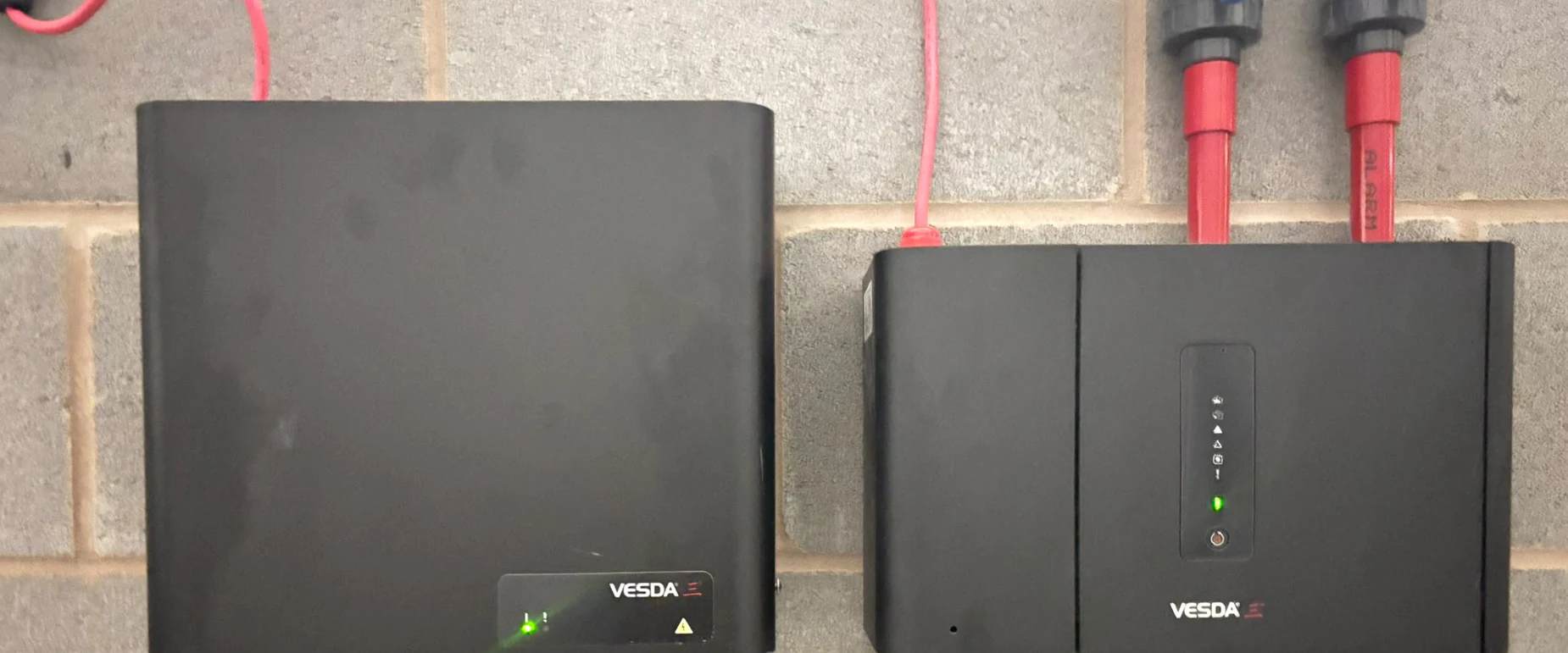
What VESDA aspirating smoke detection is
VESDA (Very Early Smoke Detection Apparatus) is an active smoke detection method that continuously draws air samples from the protected space through a network of pipework, and analyses those samples for the presence of combustion products. Where a conventional smoke detector waits for smoke to reach it, a VESDA system actively goes looking for smoke at the earliest possible stage.
That very-early-warning capability is what makes VESDA the standard for:
- High-value environments where the asset itself is more important than the building (data centres, server rooms, telecoms)
- Mission-critical infrastructure where false alarms or delayed alarms both carry serious cost
- Large open volumes where conventional detection wouldn’t reliably trigger (high atria, warehouses, MRFs)
- Difficult environments where conventional detectors get contaminated quickly (cold stores, dusty industrial process areas)
- Heritage and listed buildings where minimally invasive installation is essential
For these environments, the cost of installing aspirating detection is comfortably justified by the value of the protected asset and the cost of getting it wrong.
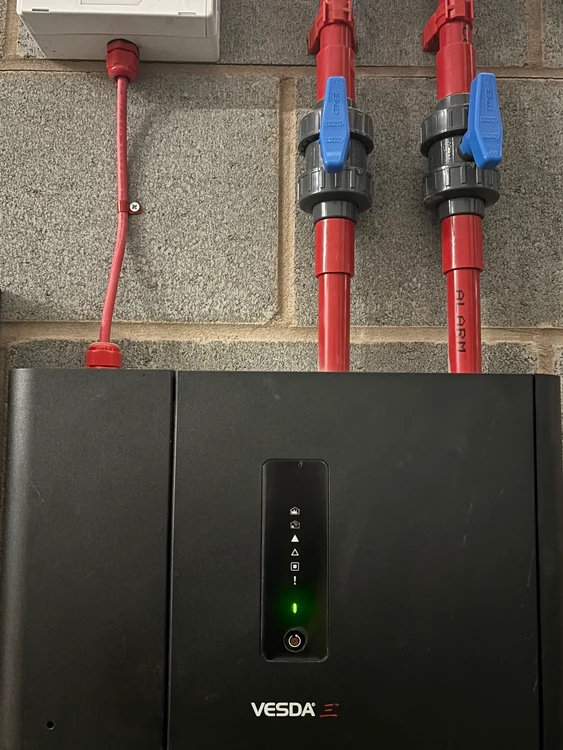
In-house aspirating pipework design
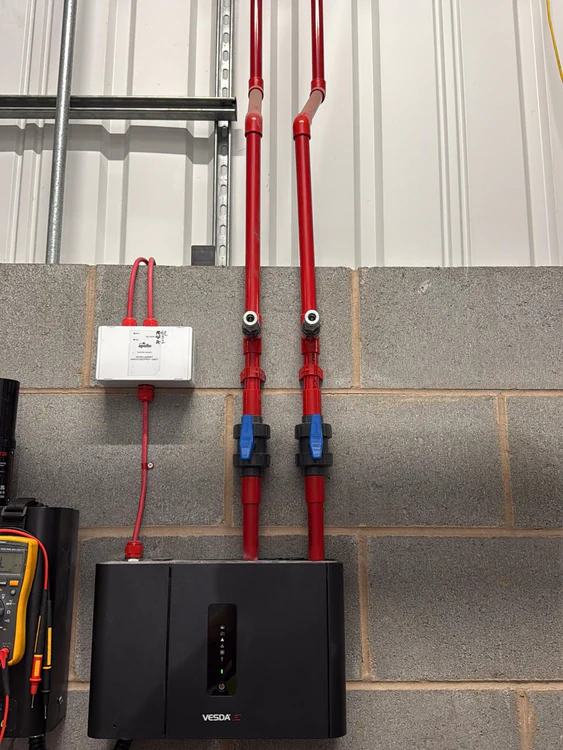
The single biggest variable in whether a VESDA installation performs well or badly is the quality of the pipework design. Sampling point spacing, transport time, airflow analysis and system configuration all have to be right for the system to deliver the very-early-warning performance it’s designed for.
We design all our aspirating pipework in-house, including:
- Sampling point layouts – calculated against the protected volume, room geometry and detection sensitivity required
- Transport time calculations – ensuring smoke reaches the detector within the response time the application demands
- Airflow analysis – balancing pressure across the sampling network
- System configuration – sensitivity settings, alarm thresholds, programming
- Manufacturer-approved design software – using the same design tools the manufacturer recommends
This in-house design capability is what separates a VESDA installation that works for 20 years from one that drifts, false-alarms or misses an actual event in the first three.
Design, install, commission, maintain
Every VESDA project we deliver includes:
Design
Either to a consultant’s specification or as a fully designed solution, including the pipework design described above.
Installation
Cylinders, detectors, pipework, sampling points, control equipment, interfaces, all installed by our own engineers.
Commissioning
Smoke testing, transport time verification, sensitivity calibration, integration testing across linked systems, cause-and-effect verification.
Handover documentation
Design calculations, as-fitted drawings, commissioning records, LPS 1014 / BS 5839 compliance documentation, sensitivity records, asset register, O&M manual.
Maintenance
Planned servicing alongside the rest of your fire safety systems, including filter changes, sensitivity verification and pipework integrity checks.
Got questions? We've answered the common ones.
Quick answers on cover, callout times, accreditations and what working with us actually looks like. Still got a question? Get in touch.
Are you accredited?
Yes. WSD holds BAFE (SP203-1), NICEIC Approved Contractor and SafeContractor accreditations, and we are members of the FIA and BSI. Insurance: £5m public liability, £10m employers’ liability, £1m professional indemnity, £5m product liability. Certificates available on request.
What VESDA manufacturers do you install?
Xtralis VESDA primarily, plus Wagner Titanus, Bosch Avenar, Honeywell FAAST and other approved aspirating detection systems where the project specification calls for them.
Can VESDA integrate with our existing fire alarm and gas suppression?
Yes. We design the integration at the same time as the VESDA installation, including the main fire alarm panel, gas suppression release, pre-action sprinkler interlocks, smoke control, HVAC interlocks, BMS and remote monitoring.
Does VESDA need LPCB or BS 5839 compliance?
Aspirating smoke detection is typically designed in accordance with LPS 1014 (the LPCB Loss Prevention Standard for aspirating smoke detectors) and BS 5839-1 (the British Standard for fire detection design). Both are referenced on most UK aspirating projects. We deliver to both.
Do you design the VESDA pipework yourselves?
Yes. All pipework design is done in-house using manufacturer-approved design software, including sampling point layouts, transport time calculations, airflow analysis and system configuration. The quality of the pipework design is the single biggest factor in whether a VESDA installation performs reliably through its life.
How does aspirating smoke detection work?
A network of pipework with sampling holes runs through the protected space. A fan in the detector unit continuously draws air through the pipework into the detector, where it is analysed for smoke particles. When the smoke concentration exceeds a defined threshold, the detector signals the fire alarm system. Sensitivity levels are typically calibrated so the system detects smoke at concentrations far below what would trigger a conventional point detector.
Do you cover the whole UK?
Yes, we deliver maintenance contracts and projects nationally from our Bromsgrove HQ. Most of mainland Britain is within a routine response window for reactive maintenance work.
Sites further from the Midlands may have slightly longer response windows for reactive call-outs; we can provide a map of typical response times by area during the initial survey if it’s relevant to your site.
What is a VESDA aspirating smoke detection system?
VESDA (Very Early Smoke Detection Apparatus) is an aspirating smoke detection system that actively draws air samples from the protected space through a network of pipework and analyses them for combustion products. It detects smoke much earlier than conventional point detectors, which makes it the standard choice for high-value environments where early warning is critical.
Where are aspirating smoke detectors typically used?
Data centres, server rooms, telecommunications facilities, cold storage, MRFs, distribution warehouses, high atria, museums and archives, pharmaceutical clean rooms, electrical switch rooms, heritage buildings. Anywhere the value of the protected asset, the geometry of the space or the environmental conditions makes conventional point detection insufficient.
Detail that often comes up.
Standards, integration, manufacturers and the questions we get asked most. Skim or dive in.
- Manufacturers
- Applications
- Compliance
- Integration
- Takeovers
- Standards
Manufacturers
We primarily work with Xtralis VESDA systems, the industry benchmark for aspirating smoke detection across UK commercial and critical infrastructure projects. We also install, commission and maintain other leading aspirating smoke detection (ASD) platforms where the project specification calls for them. Manufacturer selection is driven by the project specification, the existing detection infrastructure if it’s a retrofit, the client’s long-term maintenance preference, and the integration requirements with the wider fire alarm and suppression strategy.
Xtralis VESDA
Industry benchmark for aspirating smoke detection
Wagner Titanus
Bosch Avenar
Honeywell FAAST
Equivalent approved aspirating detection systems
Talk to our team
We will walk through your project, scope the work, and quote against what you need.
Applications
We’ve delivered VESDA and other ASD installations across a broad range of UK environments. These environments share a common theme: standard point detection isn’t good enough, either because of the geometry, the environment, the value of the protected asset, or some combination of the three.
Data centres and server rooms
The historical core market for VESDA, where early warning is critical to keeping the IT running
Telecommunications facilities
24/7 critical infrastructure where downtime cost dwarfs the cost of detection
Cold storage and refrigerated environments
Where conventional smoke detectors fail or false-alarm in low-temperature environments
Distribution and logistics warehouses
Large open volumes that conventional point detection can’t reliably cover
Manufacturing and processing facilities
Including process areas with significant air movement or particulate
Materials Recovery Facilities (MRFs)
High-risk fire load, harsh environment, where conventional detection contaminates quickly
High atria and large open spaces
Shopping centres, transport hubs, public buildings
Heritage and listed buildings
Where minimally invasive installation matters
Museums and archives
Very-early-warning detection for irreplaceable assets
Pharmaceutical and healthcare facilities
Clean and controlled environments where conventional detection is impractical
Electrical switch rooms and critical infrastructure
Protecting critical electrical assets from very early stage fires
Talk to our team
We will walk through your project, scope the work, and quote against what you need.
Compliance
VESDA aspirating smoke detection sits within the broader fire detection compliance framework. We deliver systems in accordance with:
- LPS 1014 – LPCB Loss Prevention Standard for aspirating smoke detectors
- BS 5839-1 – design principles for fire detection systems in non-domestic buildings
- LPCB and FM approved equipment throughout
- Manufacturer design and installation requirements
Both life safety and critical asset protection applications are within scope.
Talk to our team
We will walk through your project, scope the work, and quote against what you need.
Integration
VESDA is rarely standalone. It typically integrates with:
The main fire alarm system
Alarm, fault and monitoring signals through addressable or conventional interfaces
Gas suppression systems
VESDA’s very-early-warning is often the trigger for clean-agent release in data centres and similar environments
Pre-action sprinkler systems
VESDA forms the detection layer in double-interlock pre-action systems for IT environments
Smoke control and HVAC interlocks
Co-ordinated response to maintain detection conditions during an incident
Plant shutdown controls
HVAC isolation, equipment shutdown, fire dampers
BMS and remote monitoring
Status, alarms and faults visible to your facilities team and any 24/7 ARC
Talk to our team
We will walk through your project, scope the work, and quote against what you need.
Takeovers
For existing VESDA systems that have drifted out of calibration, are false-alarming, or just haven’t been properly maintained, we start with a survey and a full functional and sensitivity test. From there we’ll baseline the system, identify what needs putting right, and either bring it back into compliance with a one-off remedial visit or take it onto an ongoing maintenance contract.
Most older VESDA systems we inherit need filter changes, sampling point cleaning, calibration verification and sometimes panel reprogramming. None of that is unusual; all of it is preventable with the right maintenance regime.
Talk to our team
We will walk through your project, scope the work, and quote against what you need.
Standards
WSD’s VESDA work is delivered to current British and LPCB standards:
LPS 1014
LPCB Loss Prevention Standard for aspirating smoke detectors
BS 5839-1
Fire detection and fire alarm systems for non-domestic buildings
BS 7273-1 and BS 7273-3
Operation of fire protection measures
BS 7671
IET wiring regulations
BS 8519
Fire-resistant cable systems
Talk to our team
We will walk through your project, scope the work, and quote against what you need.
Assured, insured & compliant.
WSD holds the accreditations the industry treats as the minimum bar for serious commercial work. Backed by £5m public liability, £10m employers liability, £1m professional indemnity and £5m product liability cover. All work delivered to current British Standards.

Need VESDA designed, installed, taken over or maintained?
New build, retrofit, integration into existing critical infrastructure, or remedial work on an inherited installation – we quote against what your project actually needs.