
Gas Suppression & Fire Suppression Systems
Design, installation, commissioning and maintenance of gas suppression and clean-agent fire suppression systems for data centres, server rooms, switch rooms, archives, museums and other environments where water-based suppression isn’t an option. Novec 1230, FM-200, inert gas, CO2, all installed in-house by WSD’s own engineers, to LPCB and FM-approved standards.
Where the assets in the room are worth more than the room itself, the cost of a leak, a false discharge or a system that fails to activate is what keeps facilities managers up at night. The job of a gas suppression system is to put a fire out before it spreads, without damaging the things being protected. Our job is to install systems you can trust to do exactly that.
When gas suppression is the right answer
Gas suppression is specified instead of (or alongside) water-based fire suppression when:
- The contents of the protected space would be ruined by water discharge – servers, IT equipment, switchgear, archive material, art, scientific instruments
- The downtime cost of an unnecessary water discharge would exceed the fire damage it was preventing
- The protected space is small, sealed and high-value, where a clean-agent discharge can flood the room quickly and leave no residue
- Insurer or regulatory requirements specifically call for gaseous suppression as part of the fire strategy
The systems we install are typically deployed in:
- Data centres and server rooms
- Communications and telecommunications rooms
- Electrical switch rooms and substations
- Generator and UPS rooms
- Control rooms and critical process areas
- Archives and document storage facilities
- Museums and heritage buildings
- Pharmaceutical and research laboratories
- Financial institutions and secure facilities
- Industrial process and manufacturing environments
Suppression agents we install
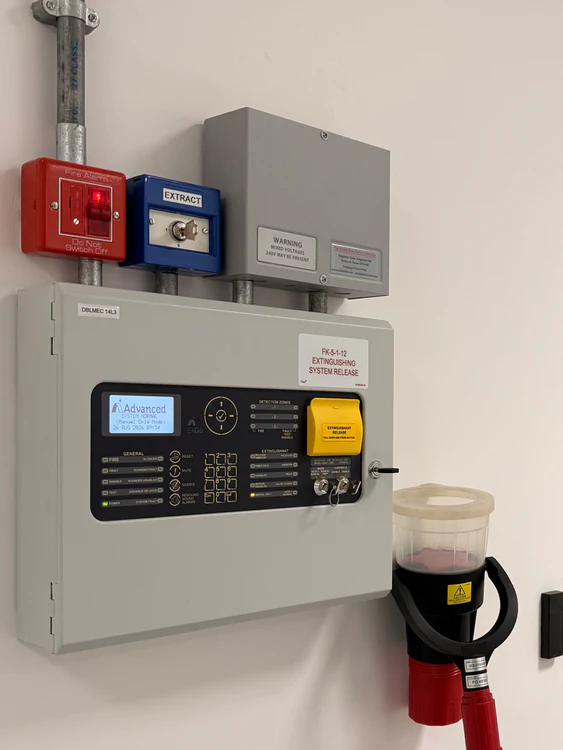
Different agents suit different applications. We install, commission, service and maintain the full range of established commercial suppression agents:
- Novec 1230 (FK-5-1-12) – 3M’s clean-agent, fast-acting suppression with very low environmental impact (low ODP, low GWP). The current default for new data centre and server room installations
- FM-200 (HFC-227ea) – historically the workhorse clean agent for data and switch rooms. Being phased out under global F-gas regulations, but we continue to maintain existing installations and refill systems through their remaining life cycle, then plan replacement to a cleaner agent
- Inert gas systems – including IG-55, IG-541, IG-100 and IG-01. Use atmospheric gases (nitrogen, argon, CO2) to displace oxygen to a level where combustion stops but the room remains survivable for short-term occupant exposure
- CO2 suppression systems – typically specified for unoccupied process areas, vaults and machinery spaces where personnel exposure can be controlled
- Clean-agent systems for critical asset protection – including specialist combinations for high-value, mission-critical environments
The right agent for any specific room depends on the protected asset, the room geometry, the occupancy pattern, the environmental considerations, the insurer’s requirements and the long-term maintenance strategy. We talk this through during design rather than defaulting to whichever agent is easiest for us to source.
Design, install, commission and maintain
Every gas suppression project we deliver includes:
Design
Either to a consultant’s specification or as a fully designed solution. Hydraulic calculations, agent quantity calculations to NFPA / EN 15004 / LPCB requirements, cylinder bank sizing, pipework routing, nozzle placement, integrated detection design.
Supply
Approved equipment from our specified manufacturers.
Installation
Cylinders, pipework, nozzles, detection, control panel, interfaces, warning devices, all installed by our own engineers.
Commissioning
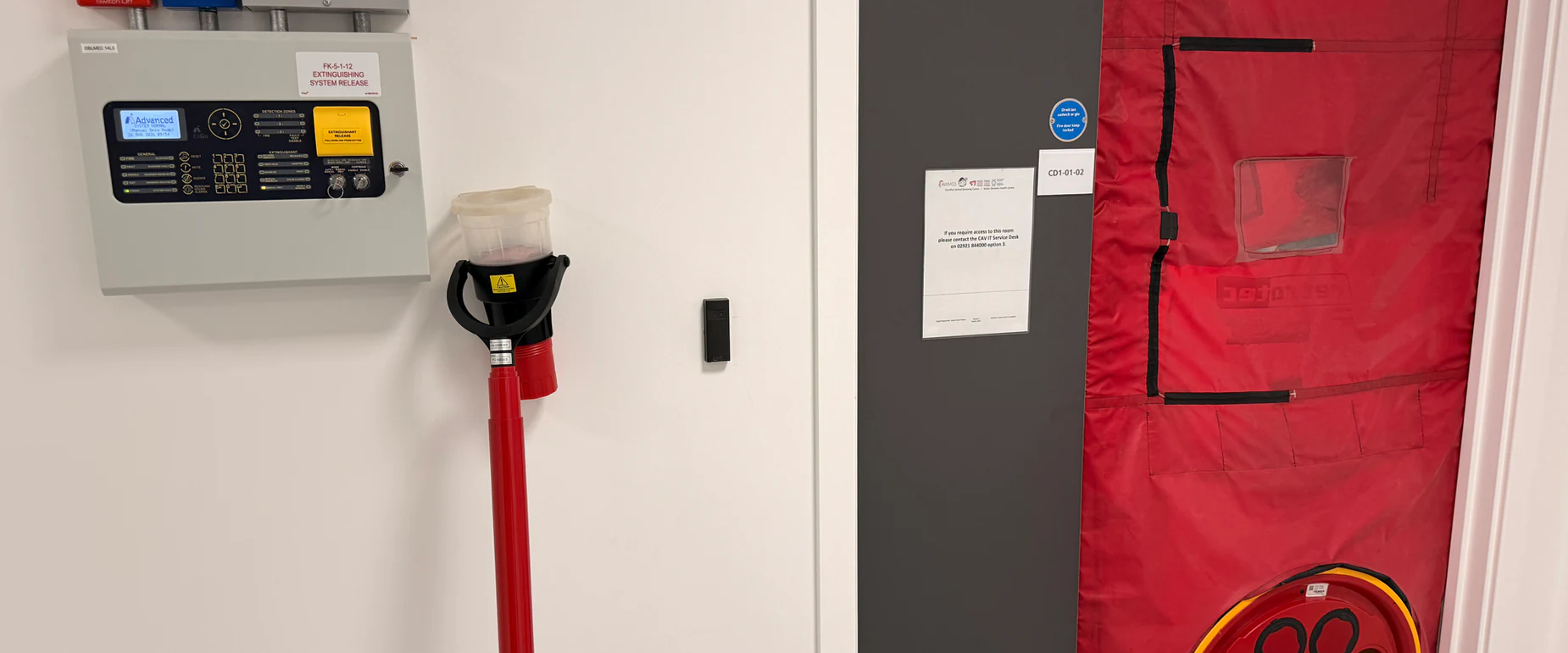
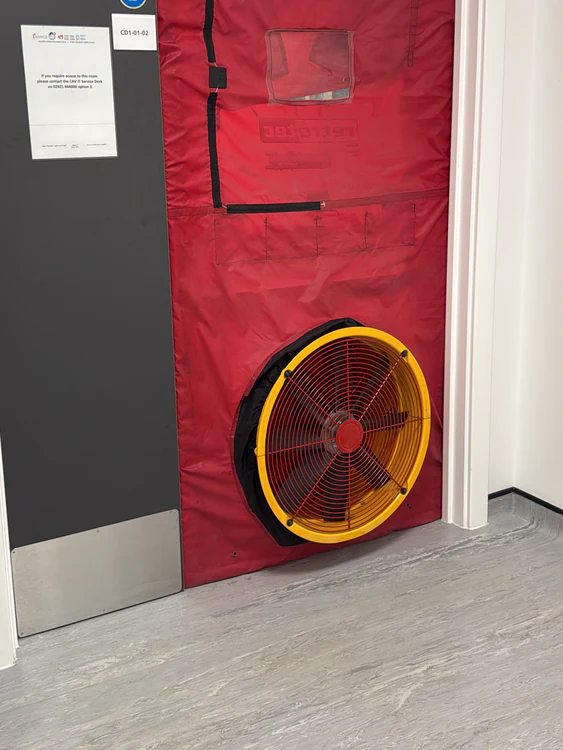
Room integrity testing (door fan test), system functional testing, integration testing with detection and linked systems, cause-and-effect verification, training for site staff.
Handover documentation
Design calculations, compliance certification, commissioning records, integrity test results, O&M manuals and ongoing maintenance recommendations.
Maintenance
Planned servicing alongside the rest of your fire safety systems.
Got questions? We've answered the common ones.
Quick answers on cover, callout times, accreditations and what working with us actually looks like. Still got a question? Get in touch.
Are you accredited?
Yes. WSD holds BAFE (SP203-1), NICEIC Approved Contractor and SafeContractor accreditations, and we are members of the FIA and BSI. Insurance: £5m public liability, £10m employers’ liability, £1m professional indemnity, £5m product liability. Certificates available on request.
What standards do you design and install gas suppression to?
BS EN 15004 for the suppression system itself, BS 5306 for fire extinguishing installations, BS 7273-1 for fire protection cause-and-effect, BS 7671 for the electrical side, and LPCB / FM approved equipment throughout. NFPA 2001 is referenced where the project specification calls for it.
What is a gas suppression system?
A fire suppression system that uses a gas or clean agent to extinguish a fire, rather than water. Used in environments where water discharge would damage the assets being protected (data centres, server rooms, archives, switch rooms) or where the response time has to be fast enough to limit fire damage before a sprinkler system could activate.
FM-200 vs Novec 1230 – which is better?
For new installations, Novec 1230 is the current default. It has very low ODP (ozone depletion potential) and GWP (global warming potential), which makes it the right answer under current environmental regulation. FM-200 is still in widespread use in existing systems and continues to be maintained, but it’s being phased out under global F-gas regulations and new installations are unusual. For most new projects, we’d specify Novec 1230 unless the client has a specific reason to do otherwise.
Can you replace our existing halon system?
Yes. We’ve delivered halon replacement projects across data centres, plant rooms and switch rooms. The most common replacement agents are Novec 1230 and inert gas systems, depending on the room and the protected assets. Talk to us and we’ll survey the existing system and walk you through the options.
Do you handle discharge recovery and recharge?
Yes. Cylinder refilling, agent recharge, system reinstatement, hydrostatic testing coordination and compliance certification. Contract clients get prioritised attendance. Non-contract clients can request the service case-by-case.
Can you integrate gas suppression with our existing fire alarm and BMS?
Yes. We design the integration alongside the suppression system itself, with cause-and-effect programming, plant shutdown, door interlocks, audible/visual warning, BMS status reporting and remote monitoring all configured at commissioning.
Is gas suppression safe for occupied spaces?
Clean-agent suppression (FM-200, Novec, IG-541) is rated for occupied spaces and discharges well below toxic concentrations. We always design with discharge time, room integrity, alarm pre-discharge delay and evacuation routes in mind.
Do you cover the whole UK?
Yes, we deliver maintenance contracts and projects nationally from our Bromsgrove HQ. Most of mainland Britain is within a routine response window for reactive maintenance work.
Sites further from the Midlands may have slightly longer response windows for reactive call-outs; we can provide a map of typical response times by area during the initial survey if it’s relevant to your site.
Detail that often comes up.
Standards, integration, manufacturers and the questions we get asked most. Skim or dive in.
- Manufacturers
- Halon replacement
- Discharge recovery
- Integration
- Standards
Manufacturers
We work with the industry’s established gas suppression equipment manufacturers. Manufacturer selection is driven by project requirements, the M&E consultant’s specification, the agent being installed, and the client’s long-term serviceability preference. As with all our work, we install what fits the project rather than what fits us best.
Kidde Fire Systems
Fike
FirePro
Minimax
Other LPCB and FM-approved suppression equipment manufacturers
Talk to our team
We will walk through your project, scope the work, and quote against what you need.
Halon replacement
If your building has a legacy halon suppression system, it’s almost certainly past replacement. Halon was banned in the EU and UK under the Montreal Protocol for new installations, and existing critical-use systems have been progressively phased out. We’ve delivered replacement projects across data centres, plant rooms and switch rooms moving from halon to modern clean agents like Novec 1230 and inert gas systems.
If you’re not sure whether your existing system is halon, or whether it’s still legally permitted in your application, talk to us and we’ll survey the system and walk you through the replacement options.
Talk to our team
We will walk through your project, scope the work, and quote against what you need.
Discharge recovery
A gas suppression system that’s been activated, tested or partially discharged needs to be properly reinstated before it’s compliant or operational again. We provide:
- Discharge recovery support following an activation or unintended discharge
- Cylinder refilling and agent recharge to manufacturer specification
- System reinstatement including pressure testing, leak testing and panel reset
- Cylinder replacement where existing cylinders are past their service life
- Hydrostatic testing coordination at the legally required intervals
- Compliance certification to confirm the system is back to fully operational and compliant
For contract clients, discharge recovery is prioritised. For non-contract clients, it’s available case-by-case.
Talk to our team
We will walk through your project, scope the work, and quote against what you need.
Integration
Gas suppression is rarely a standalone system. It needs to be integrated with:
Detection systems
VESDA aspirating smoke detection, conventional or addressable smoke and heat detection, linear heat detection cable
The main fire alarm system
So an activation is signalled across the building, not just to the room being protected
Plant shutdown controls
HVAC isolation, fire dampers, equipment shutdown to maintain the suppression environment during discharge
Door interlocks and audible / visual warning devices
So occupants are warned to leave before the suppression discharges
Building Management Systems (BMS)
So the BMS knows the suppression status
Remote monitoring
Including alarm receiving centres where required
Talk to our team
We will walk through your project, scope the work, and quote against what you need.
Standards
WSD’s gas suppression work is delivered to current British, European and international standards:
BS EN 15004
Fixed firefighting systems: gas extinguishing systems
BS 5306
Fire extinguishing installations and equipment on premises
BS 7273-1
Code of practice for the operation of fire protection measures
BS 7671
IET wiring regulations
LPCB and FM
Approved equipment and design standards
NFPA 2001
Standard on clean agent fire extinguishing systems (international reference)
Talk to our team
We will walk through your project, scope the work, and quote against what you need.
Assured, insured & compliant.
WSD holds the accreditations the industry treats as the minimum bar for serious commercial work. Backed by £5m public liability, £10m employers liability, £1m professional indemnity and £5m product liability cover. All work delivered to current British Standards.

Need gas suppression designed, installed, replaced or recharged?
New build, retrofit, halon replacement, discharge recovery, or ongoing maintenance – we quote against what your project actually needs.